Luxury Homes in Greece 2026: Investor & Buyer Guide
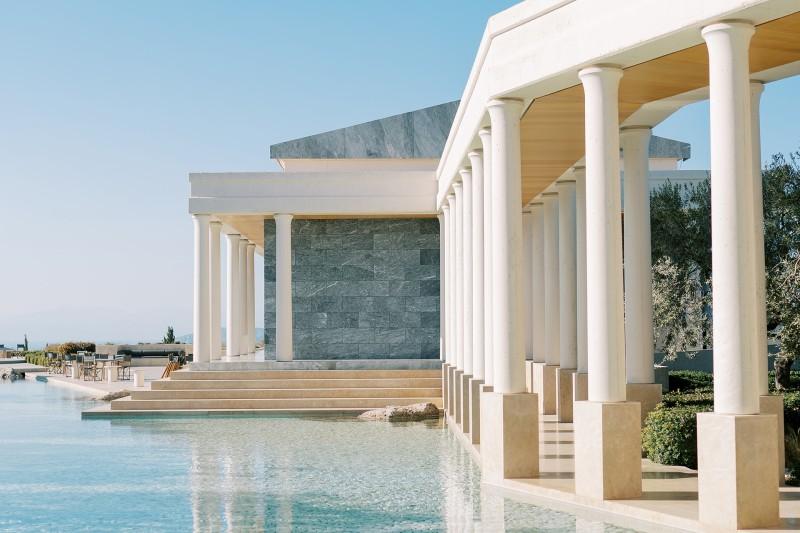
Luxury property in Greece has entered 2026 as a mature, internationally recognised asset class within the broader real estate Greece market, with prices in prime Attica zones ranging from €6,000 to €12,000 per square metre and waterfront trophy homes exceeding €20,000. Demand remains firm, driven by high-net-worth foreign buyers, returning members of the Greek diaspora and remote-working professionals relocating for lifestyle and tax reasons. The 2025 overhaul of the Golden Visa — Greece's residence-by-investment programme — has redirected premium demand toward larger, higher-quality assets and secondary markets such as Thessaloniki and the larger islands, strengthening the real estate Greece sector's competitive positioning internationally.
For non-Greek buyers weighing 2026 as an entry point, understanding pricing by district, the legal framework and the emerging geography of luxury is essential. This guide sets out the current picture and the outlook running into 2027.
The Greek Luxury Housing Market: State of Play in 2026
After the explosive appreciation of 2021–2024, when double-digit annual price growth was routine along the Athens Riviera and the southern suburbs, the market has moved into a phase of stabilisation. Growth in 2026 is running at more sustainable levels — a sign of maturity rather than weakness. Liquidity has deepened, institutional transparency has improved and the pipeline of prime, energy-efficient stock is finally beginning to answer years of pent-up international demand.
Who Is Buying Luxury Property in Greece?
The buyer profile has broadened significantly. Foreign investors remain the dominant force, with strong flows from Germany, the United Kingdom, the United States, Israel and the Gulf states. In parallel, high-earning remote professionals are relocating to Greece as either their primary or secondary residence, often taking advantage of the country's non-dom tax regime, which offers a flat annual tax on foreign-sourced income for qualifying newcomers.
The revised Golden Visa — which grants five-year renewable residence permits to non-EU investors — now requires a minimum property investment of €800,000 in high-demand zones, including Attica, Thessaloniki, Mykonos, Santorini and islands with populations above 3,100. This has pushed capital toward larger, better-built assets and simultaneously energised secondary luxury markets where lower thresholds still apply.
How Much Does a Luxury Home in Greece Cost in 2026?
In the prime zones of Attica, luxury residences typically trade between €6,000 and €12,000 per square metre, with waterfront villas in Vouliagmeni and select Athens Riviera projects surpassing €20,000. Compared with 2024, when averages in the same districts were materially lower, cumulative appreciation is significant. In emerging premium areas — parts of Thessaloniki, the Peloponnese coast, and smaller Cycladic islands — pricing remains 30% to 50% below Attica benchmarks, with a stronger runway for capital growth into 2027.
Buyers should also budget for transaction costs: a 3.09% transfer tax on resale properties (24% VAT applies only to certain new-builds), notary and legal fees of roughly 1.5%–2%, and the annual ENFIA property tax — a national levy calculated on the property's objective value (a state-assessed reference figure often below market price).
Where Are the Top Areas for Luxury Homes in Greece?
The geography of Greek luxury has widened well beyond the traditional strongholds. New districts have entered the premium map, offering alternatives on both location and investment profile.
Athens Riviera and Southern Suburbs
The Athens Riviera remains the flagship of the market. The delivery of major sections of The Ellinikon — Europe's largest urban regeneration project, built on the former Athens airport site — together with new developments in Glyfada, Voula and Vouliagmeni, has created an ecosystem of international standard. Vouliagmeni retains price leadership, while Glyfada offers the most balanced combination of lifestyle amenities, services and rental yield.
Central Athens and Northern Suburbs
In the historic centre, Kolonaki, Plaka and the neighbourhoods around the Acropolis retain their prestige, particularly for buyers seeking apartments in neoclassical buildings or premium new complexes with monument views. The northern suburbs — Ekali, Kifisia and Psychiko — remain the preferred choice for family buyers prioritising privacy, gardens and long-term residence.
Islands and Emerging Destinations
Mykonos and Santorini remain the international face of Greek luxury, with pricing that rivals Ibiza or the Côte d'Azur. But 2026 has brought clear new poles: Paros, Tinos, Syros, Kythira and select Crete markets — particularly Chania and Agios Nikolaos — are recording strong demand from buyers seeking authenticity paired with quality infrastructure. On the mainland, Messinia in the Peloponnese, anchored by the Costa Navarino resort complex, continues its rise as a branded residences destination.
Can Foreigners Buy Luxury Property in Greece?
Yes. There are no nationality restrictions on foreign buyers of Greek real estate, apart from limited border-area rules requiring administrative approval for non-EU citizens in specific regions. The purchase process requires a Greek tax number (AFM), a Greek bank account, and representation by a notary — mandatory under Greek law for all property transfers. Most international buyers also engage an independent lawyer to conduct title searches at the local land registry or the newer National Cadastre.
For Golden Visa applicants, the investment must be completed and the property held for as long as residence status is maintained. The permit extends to the investor's spouse, children under 21 and dependent parents on both sides.
Investment Strategy and the 2027 Outlook
Buyers targeting rental yield should watch the regulatory environment closely: municipalities under heavy tourist pressure — including central Athens and parts of the Cyclades — are examining tighter caps on short-term rentals. Investors positioning for capital appreciation, by contrast, will find Greek luxury real estate offering one of the more attractive risk-return profiles in the Mediterranean.
Consensus forecasts for 2027 point to a continuation of upward trends, at more measured but steady rates. The completion of major infrastructure projects, expanded international air connectivity and Greece's growing profile as a permanent-relocation destination act as structural supports. Meanwhile, the supply of new, energy-upgraded homes remains constrained relative to demand — a dynamic that continues to favour early movers.
The Benefits of Investing in Real Estate Greece: A Growing Market Opportunity
Greece has emerged as one of Europe's most attractive real estate markets in recent years. The combination of favorable tax incentives, stable property values, and increasing rental demand makes real estate Greece an excellent investment choice for both domestic and international buyers. With tourism booming and EU support driving economic growth, properties in Greece continue to appreciate steadily. Whether you're seeking residential properties, vacation rentals, or commercial spaces, the Greek real estate market offers diverse opportunities with strong return potential for savvy investors.
FAQ
What is the minimum investment for the Greece Golden Visa in 2026?
In high-demand zones — including Attica, Thessaloniki, Mykonos, Santorini and larger island municipalities — the minimum property investment is €800,000, with a required minimum unit size of 120 square metres. In other regions, thresholds start at €400,000. The investment must be made in a single property, and the permit is renewable every five years provided the asset is retained.
Where are the best areas to buy a luxury home in Greece?
For established prestige, Vouliagmeni, Glyfada and the northern suburbs of Kifisia and Ekali lead the market. For lifestyle-driven island purchases, Mykonos and Santorini retain premium status, while Paros, Tinos and Chania in Crete offer strong value with rising international recognition. Messinia in the Peloponnese is the leading mainland destination for branded resort residences.
How much tax do foreign owners pay on Greek property?
Owners pay ENFIA, an annual national property tax based on the state's objective value of the asset — typically a few hundred to a few thousand euros for luxury homes, depending on location and size. Rental income is taxed on a progressive scale from 15% to 45%. Foreign residents relocating under the non-dom regime can opt for a flat €100,000 annual tax on worldwide non-Greek income for up to 15 years.
Is Greek luxury real estate still a good investment in 2026?
Yes, though returns are moderating from the 2021–2024 boom. Supply of premium, energy-efficient homes remains limited, foreign demand is structurally strong, and major infrastructure delivery — particularly at The Ellinikon — continues to support prices. Analysts expect steady but more sustainable appreciation into 2027, especially in emerging premium locations.
At ReWize we track the Greek property market daily and support international buyers and investors with data, analysis and specialised expertise — so every decision rests on real market intelligence rather than intuition.
Looking for a property? See what is available today from the ReWize agent network: homes for rent in Thessaloniki · homes for sale in Thessaloniki · property in Athens.
Selling or renting out? Request a free valuation from a network agent.